Skip to product information
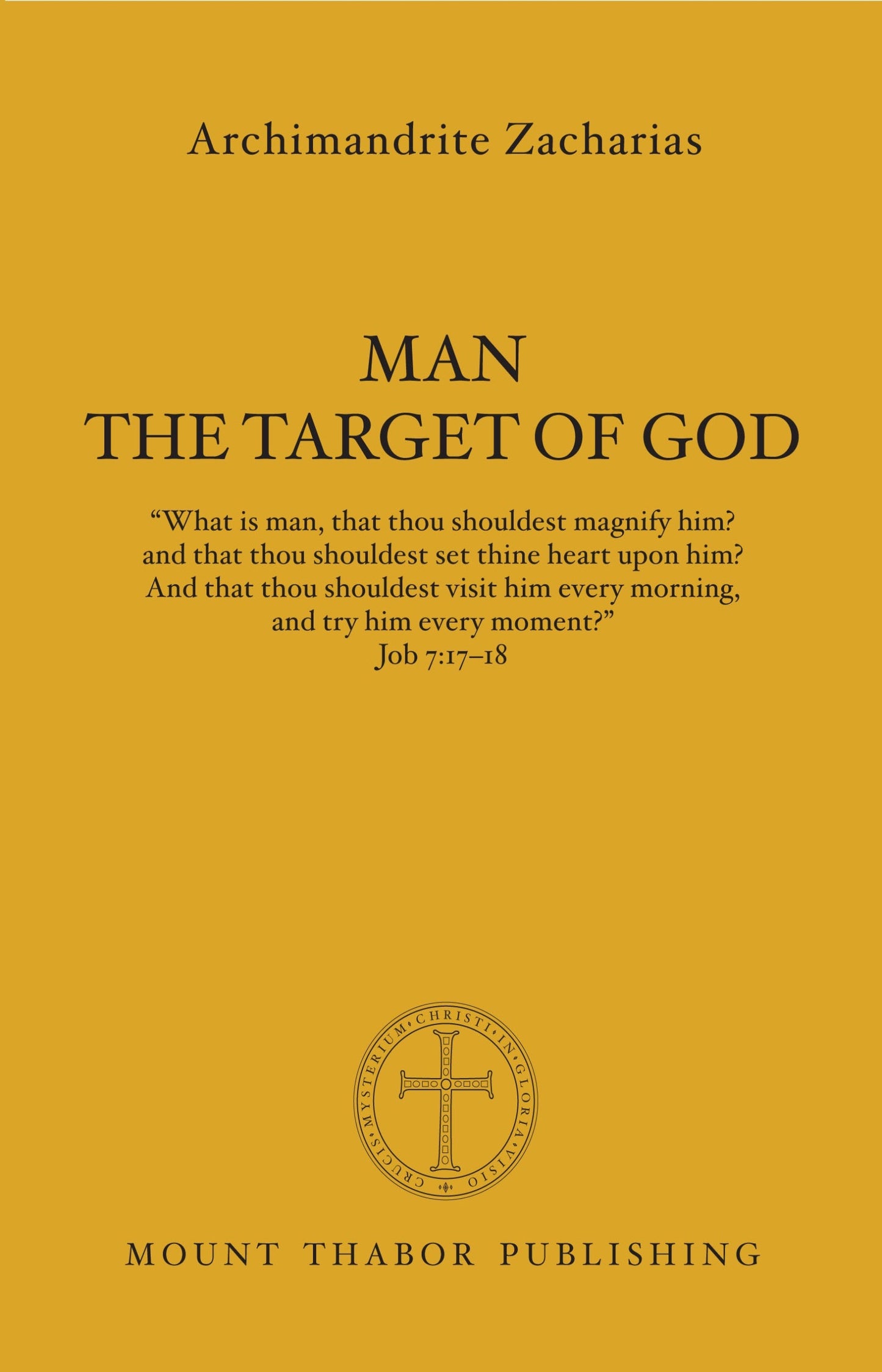
  • Front Cover of Man the Target of God by Archimandrite Zacharias
1 of 19

MOUNT THABOR PUBLISHING

Man the Target of God, by Archimandrite Zacharias

Regular price ÂŁ16.00 GBP
Regular price Sale price ÂŁ16.00 GBP
Shipping calculated at checkout.

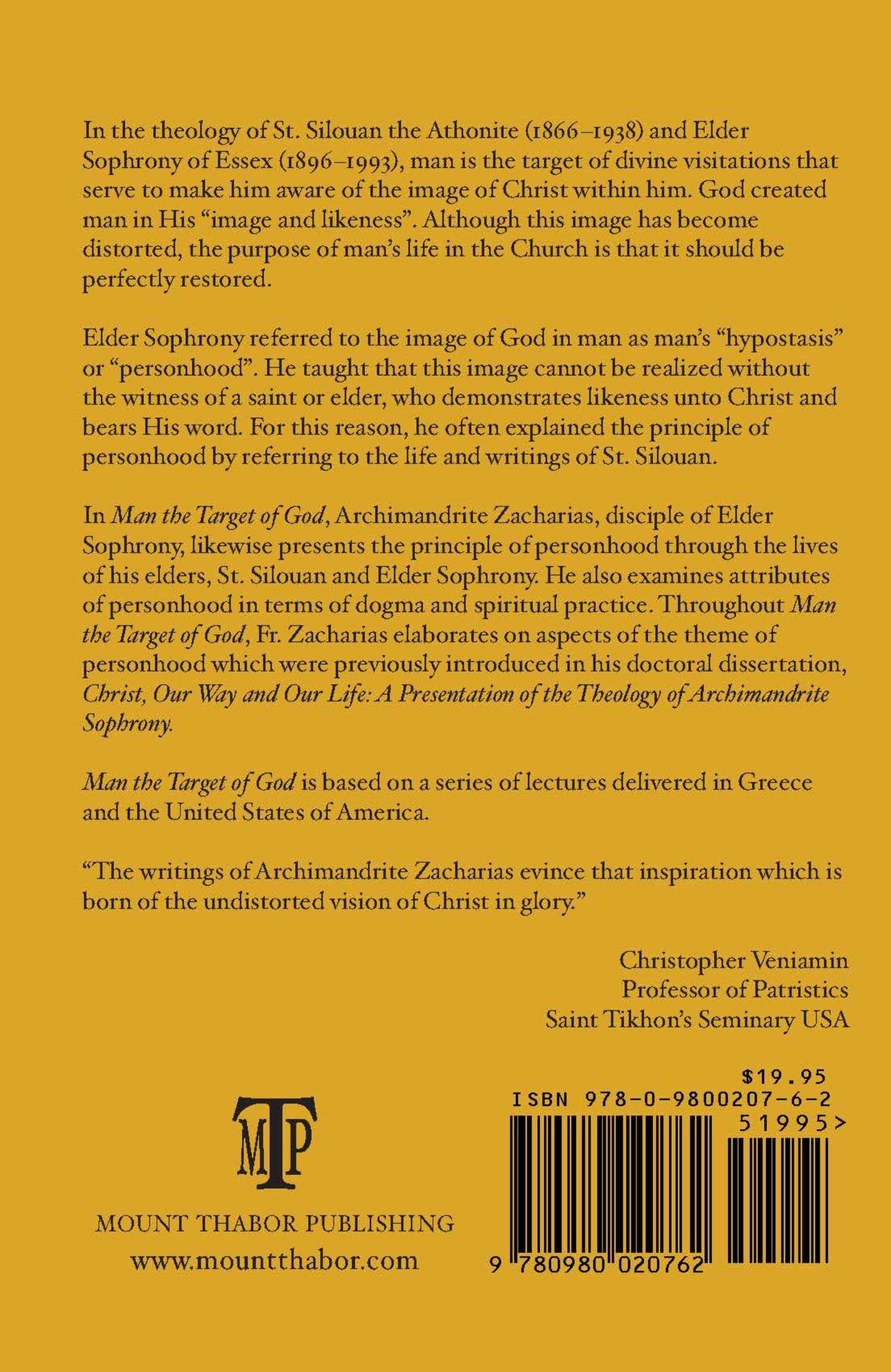
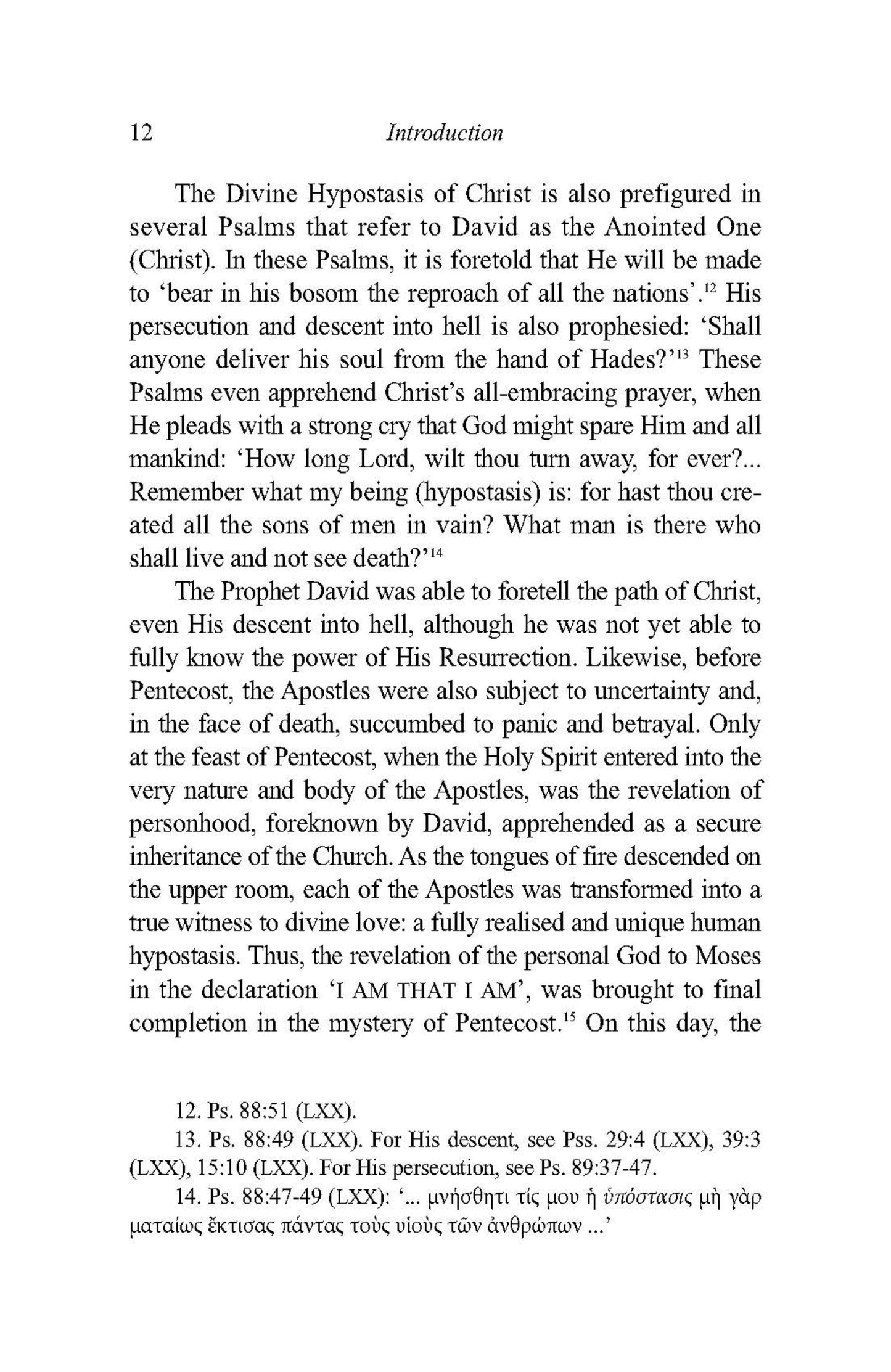
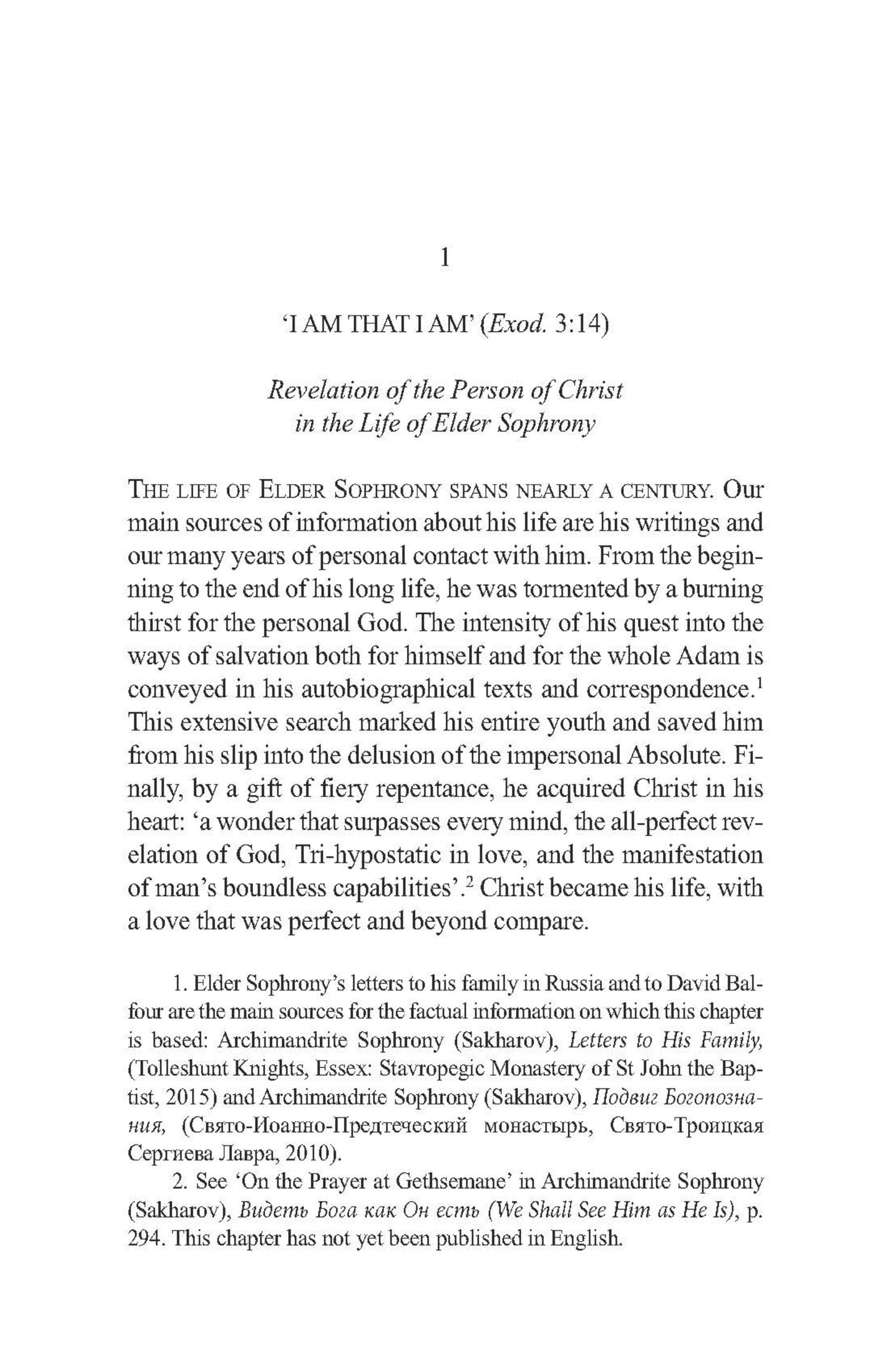
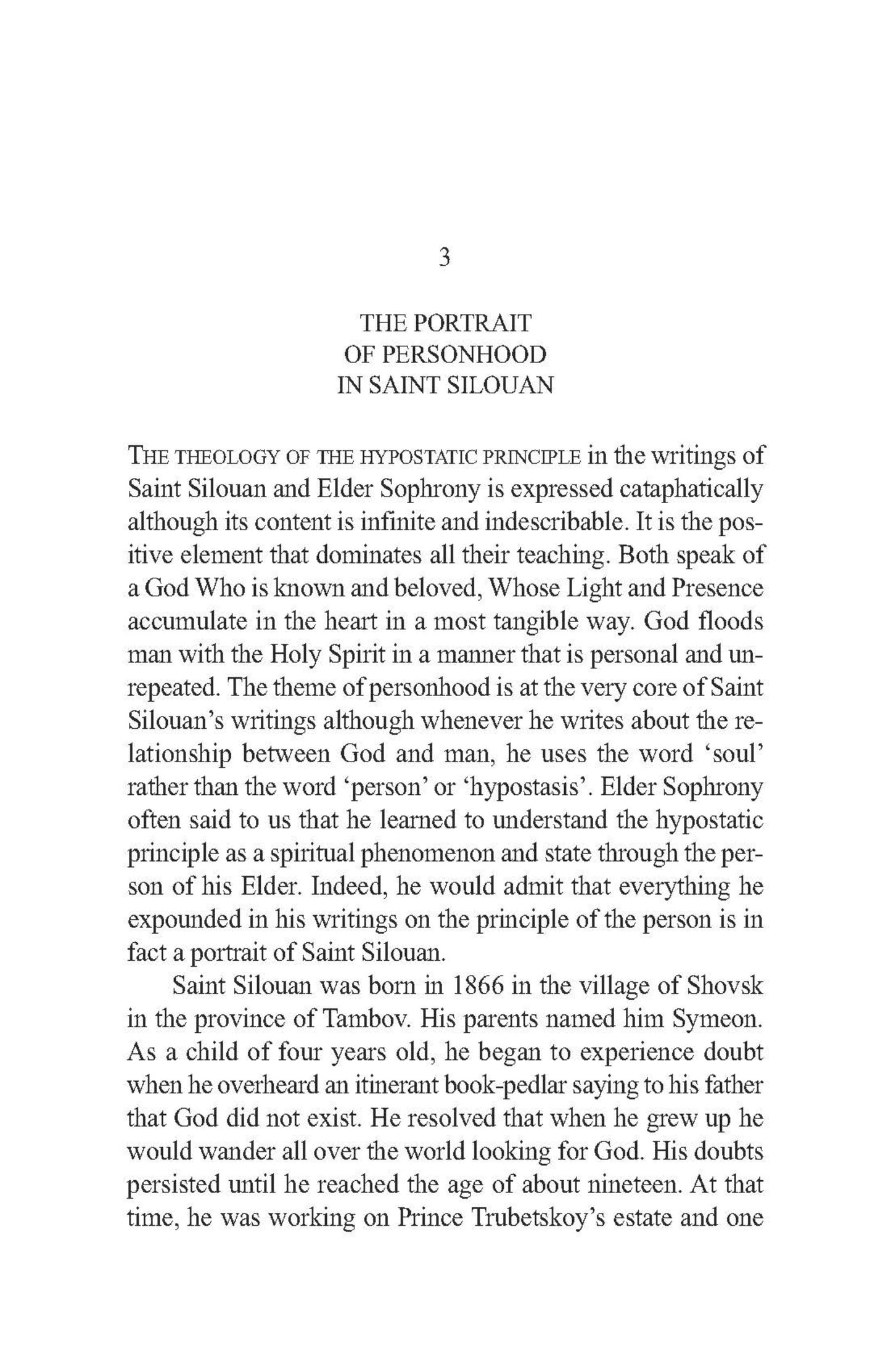
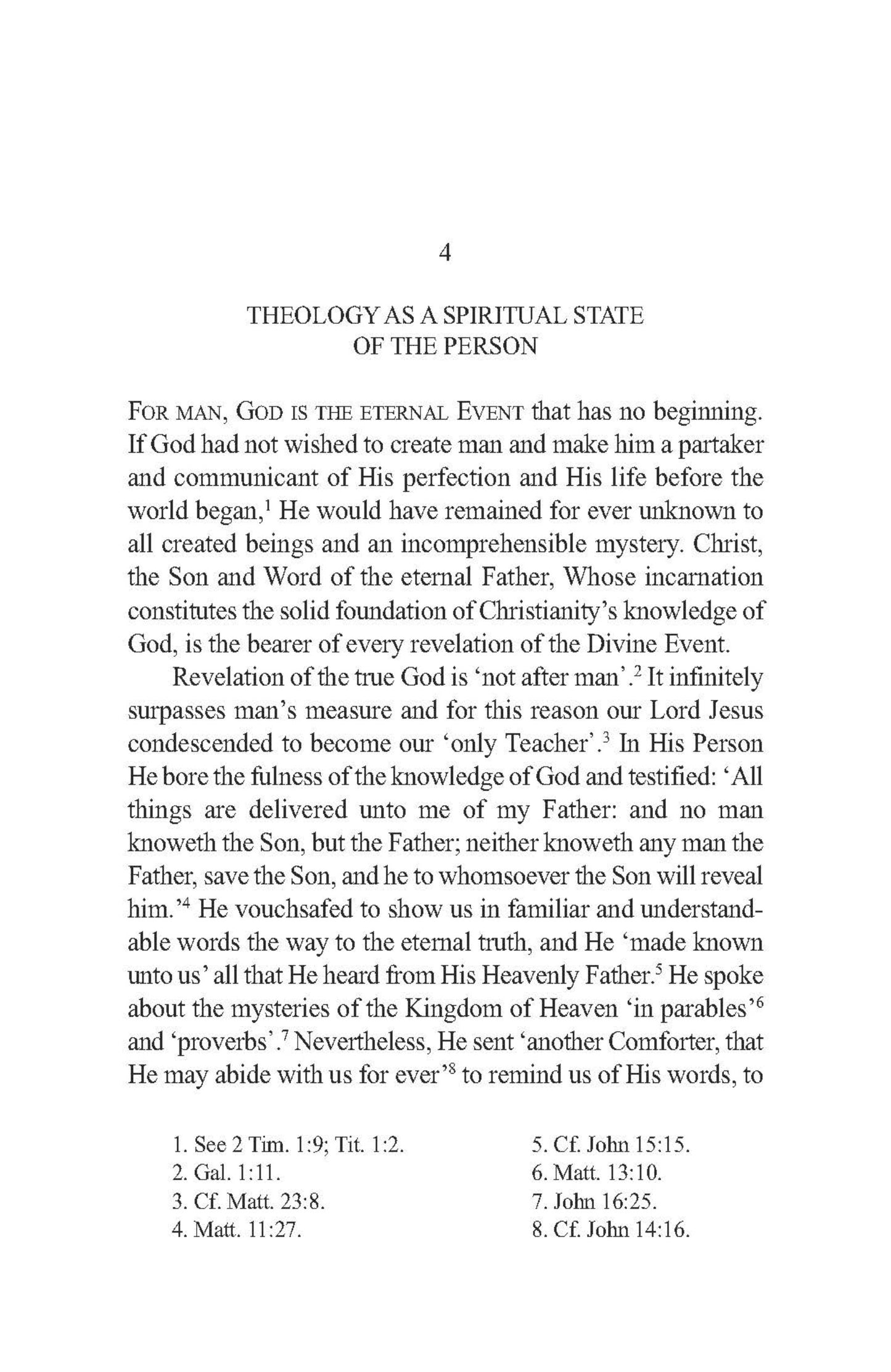
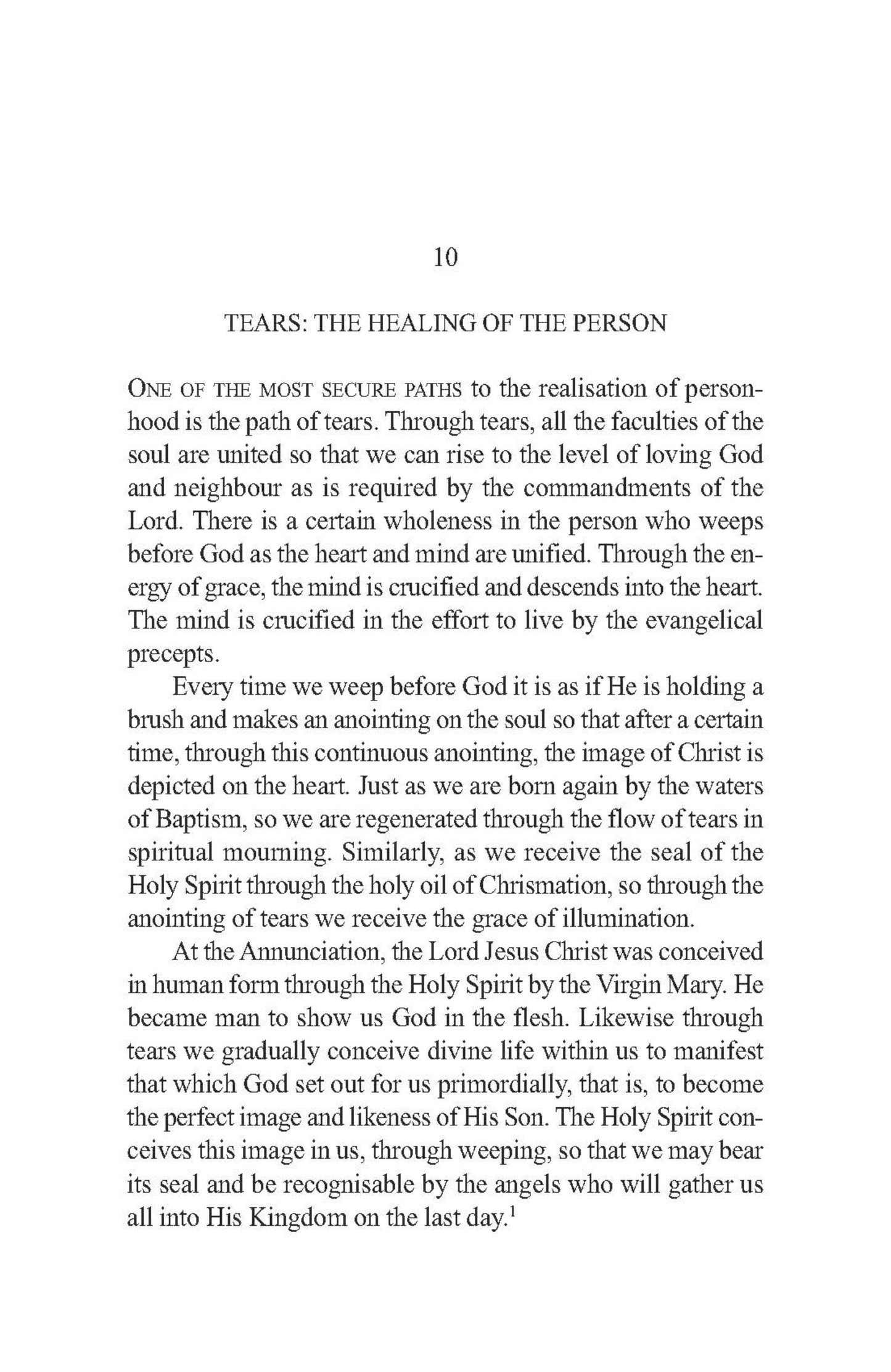
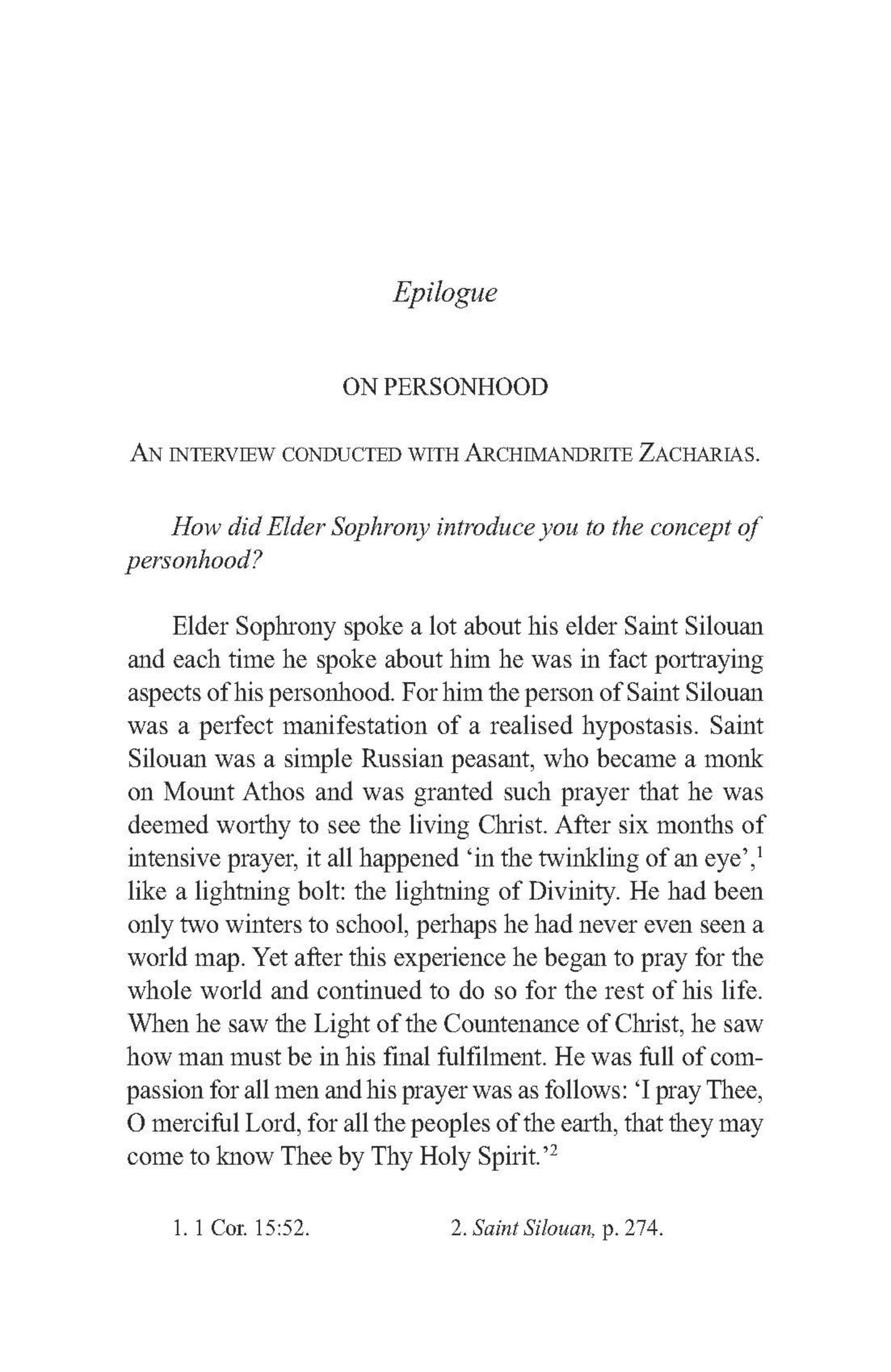
In the theology of St. Silouan the Athonite (1866–1938) and St. Sophrony of Essex (1896–1993), man is the target of divine visitations that serve to make him aware of the image of Christ within him. God created man in His “image and likeness”. Although this image has become distorted, the purpose of man’s life in the Church is that it should be perfectly restored. St. Sophrony referred to the image of God in man as man’s “hypostasis” or “personhood”. He taught that this image cannot be realized without the witness of a saint or elder, who demonstrates likeness unto Christ and bears His word. For this reason, he often explained the principle of personhood by referring to the life and writings of St. Silouan. In Man the Target of God, Archimandrite Zacharias, disciple of St. Sophrony, likewise presents the principle of personhood through the lives of his elders, St. Silouan and St. Sophrony. He also examines attributes of personhood in terms of dogma and spiritual practice. Throughout Man the Target of God, Fr. Zacharias elaborates on aspects of the theme of personhood which were previously introduced in his doctoral dissertation, Christ, Our Way and Our Life: A Presentation of the Theology of Archimandrite Sophrony. Man the Target of God is based on a series of lectures delivered in Greece and the United States of America.

“The writings of Archimandrite Zacharias evince that inspiration which is born of the undistorted vision of Christ in glory.”

Christopher Veniamin, Professor of Patristics, Saint Tikhon’s Seminary USA

Customer Reviews

Overall rating: 5.0 / 5 from 7 reviews.

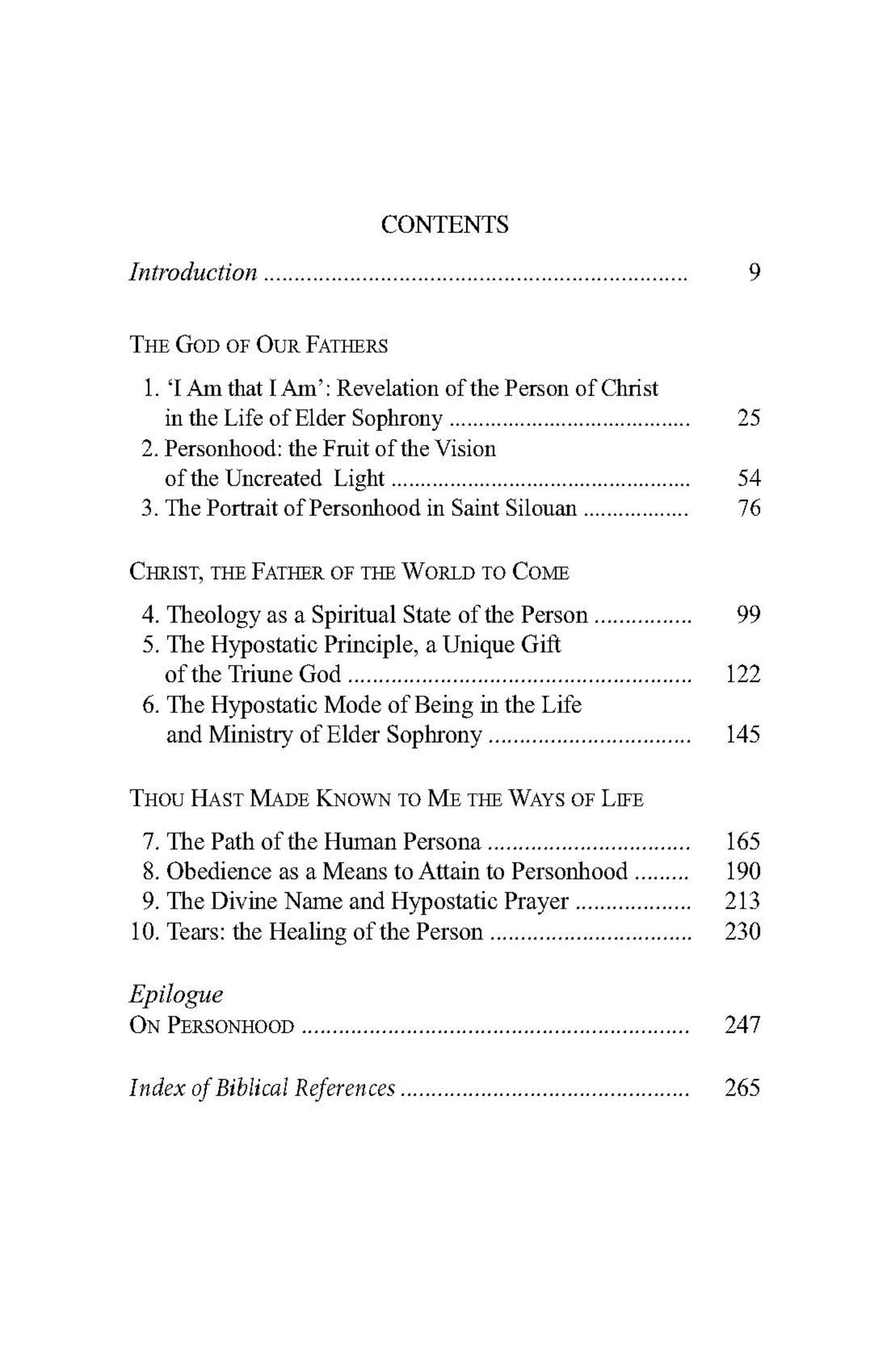
This is a relatively simple book about a difficult topic. Theological anthropology is not well developed in the Protestant world, which is itself derived from Medieval Roman Catholicism. While Roman Catholic Theological Anthropology has progressed by leaps and bounds (see ' Man and Woman He Created Them: A Theology of the Body ' by John Paul II), Protestant theology in this area remains stuck in the Middle Ages. By contrast, the Eastern Orthodox have always maintained their own distinct theology of the Person, which is connected to the Person of Jesus Christ, and is thereby connected to the persons of the Holy Trinity. A few days before his death, [Elder Sophrony] asked two of his monks to write down the four central points of his theology on the hypostasis, which are briefly as follows. 1. Christ is the true Person, as was revealed to Moses in the words 'I AM THAT I AM'. 2. Man is a person, created in God's image and likeness. 3. The content of the Person of Christ is His self-emptying love unto the end, by which he accomplished the salvation of the world. 4. Man likewise proves himself a person when he acquires love for God to the point of self-hatred, pure prayer which accompanies this, and prayer for the world similar to Christ's prayer at Gethsemane. This is a summary of the Orthodox Theological Anthropology. The careful reader will note the Orthodox approach is not to divide issues into a hierarchy of categories, nor to deal with each issue atomistically. Instead, the Orthodox prefer a holistic approach in which the connections between Western categories are emphasized. Thus in dealing with the issue of human nature, we begin with Jesus Christ, who is revealed to us by the Holy Spirit to be the image of the invisible God. Thus, the very idea of the person is connected to the hypostasis of Father, Son, and Holy Spirit. From there we proceed not to the Fall of Man, but rather to the creation of Man in the image and likeness of God. We connect the image and likeness of God both to the revelation of Christ as the 'I AM THAT I AM' and to His self-emptying love for man. From thence we come to the Man after the fall, whose human nature has been revived in Christ, and who is now able through self-renunciation and love for Christ to see Him as He is, and to thereby become a partaker of the glory that shall be revealed.

Man the Target of God, by Fr. Zacharias